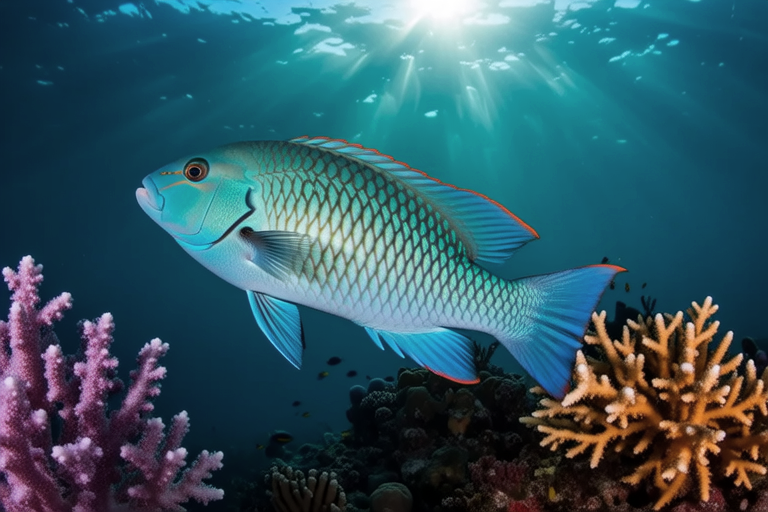
Parrot Fish: The Hidden Gems of the Marine World
Welcome to the vibrant and colorful world of parrot fish, a group of marine fish known for their striking appearance and essential roles within coral reef ecosystems. These captivating creatures have long fascinated divers and marine enthusiasts alike, thanks to their unique physical features and behaviors. This article aims to provide you with an engaging and informative overview of parrot fish, covering their appearance, ecological significance, behaviors, life cycles, and conservation efforts.
The Unique Appearance of Parrot Fish
Parrot fish are easily recognizable by their bright, vivid colors and distinctive beak-like mouths. Their scales are often arranged in patterns that resemble the feathers of a parrot, hence their common name. Depending on the species, their hues can range from electric blues and greens to fiery reds and oranges, making them one of the most visually stunning fish in the ocean. Not only do these colors serve as camouflage within the colorful coral reefs, but they also play a significant role in communication, particularly during mating rituals. Male parrot fish are especially vibrant, with some species exhibiting dramatic color changes when competing for mates or defending territory.
An Ecological Role: Maintaining Coral Reefs
One of the most important roles parrot fish play in the marine ecosystem is their contribution to the health of coral reefs. They are considered “grazers,” feeding primarily on algae that grow on coral surfaces. By consuming this algae, parrot fish help prevent overgrowth, which could otherwise smother the coral and hinder its ability to photosynthesize. In addition to this, their digestive process turns the algae into sand, contributing to the formation of beaches and islands. Without parrot fish, many coral reefs would struggle to maintain their structural integrity, making their conservation a priority for marine biologists and environmentalists.
Behavioral Traits: Sleeping Habits and More
Parrot fish exhibit fascinating behaviors, one of which is their unique sleeping habit. At night, these fish secrete a protective mucus cocoon around themselves. This mucus serves multiple purposes; it masks their scent, protecting them from nocturnal predators, and may even act as a mild sedative, helping the fish to rest more comfortably. Additionally, parrot fish are social creatures, often schooling together for protection. They communicate through a variety of sounds, from grunts and chirps to high-pitched whistles, which can be heard by other fish in the vicinity. These vocalizations are believed to play a role in territorial defense and mate selection.
Lifecycle and Species-Specific Traits
The lifecycle of a parrot fish is both complex and intriguing. It begins with the spawning of eggs, which are fertilized externally by male fish. After hatching, the larvae drift in the open ocean before settling on a reef. As they mature, they undergo a series of transformations, including changes in body shape and coloration. Some species exhibit protogyny, meaning they are born female and later transition into males if there is a need for a dominant male in the group. This flexibility in sex roles is an adaptation that ensures reproductive success within the species.
There are numerous species of parrot fish, each with its own set of characteristics. For instance, the Queen parrot fish (Scarus vetula) is known for its elaborate courtship displays, while the Blue parrot fish (Scarus coeruleus) has a striking blue body with yellow and black stripes. Another notable species is the Stoplight parrot fish (Sparisoma viride), recognized by its vibrant orange head and green body, along with a distinctive red spot near its gills, which acts as a warning signal to potential predators.
Conservation Efforts and the Importance of Habitat Preservation
Despite their importance to marine ecosystems, parrot fish face numerous threats, including overfishing, habitat destruction, and pollution. Many species are targeted for their meat and bright scales, which are used in jewelry and decorations. Additionally, the degradation of coral reefs due to climate change, pollution, and destructive fishing practices poses a significant threat to parrot fish populations. Conservation efforts are underway to protect these vital marine creatures and their habitats. Marine protected areas (MPAs) have been established to safeguard critical reef environments, and sustainable fishing practices are being promoted to ensure the long-term survival of parrot fish.
Preserving the habitats of parrot fish is crucial for marine biodiversity. Coral reefs are among the most diverse ecosystems on Earth, supporting thousands of species of fish, invertebrates, and plants. By protecting parrot fish, we are indirectly supporting the entire reef community. Furthermore, healthy coral reefs provide essential services to humans, such as coastal protection, tourism opportunities, and sources of food. Therefore, the conservation of parrot fish is not just about saving a beautiful fish species but also about ensuring the health and resilience of our oceans.
In conclusion, parrot fish are indeed hidden gems of the marine world, offering a unique glimpse into the wonders of ocean life. From their vibrant colors and fascinating behaviors to their crucial role in maintaining coral reefs, these fish captivate us with their beauty and importance. By understanding and appreciating parrot fish, we can better advocate for their protection and the preservation of the marine ecosystems they call home. Let us all strive to be stewards of the sea, ensuring that future generations can marvel at the splendor of parrot fish and the rich biodiversity they represent.
