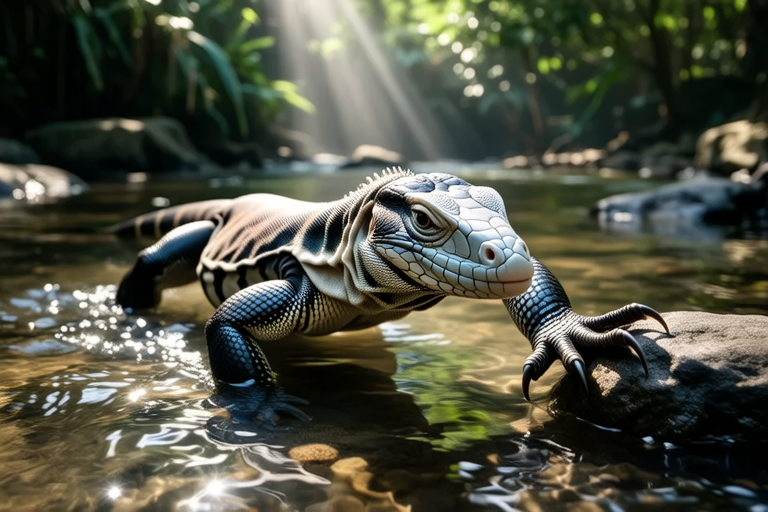
Aquatic Adventures with the Water Monitor: A Guide for Aspiring Reptile Owners
Welcome to the fascinating world of the water monitor (Varanus salvator)! Known for their agility, intelligence, and adaptability, these reptiles are a popular choice among enthusiasts. However, owning a water monitor comes with significant responsibilities and unique challenges. This guide aims to provide aspiring reptile owners with all the necessary information to ensure a rewarding experience with these magnificent creatures.
The Natural Habitat of the Water Monitor
Water monitors are native to Southeast Asia, where they thrive in diverse environments such as swamps, rivers, and coastal areas. They are highly adaptable and can be found from India through Indonesia and parts of the Philippines. These habitats offer ample opportunities for swimming, basking, and hunting, which are crucial aspects of their daily lives.
Dietary Needs
Water monitors are carnivorous and have a varied diet that includes insects, small mammals, fish, and birds. In captivity, it’s essential to provide a balanced diet rich in protein. Juvenile monitors can be fed smaller prey items like crickets and mealworms, while adults require larger food items such as mice, chicks, and fish. Feeding them every other day or three times a week is usually sufficient.
Housing Requirements
Providing an appropriate living space is critical for the well-being of your water monitor. These animals are large and active, requiring a spacious enclosure. For juveniles, a 40-gallon tank might suffice initially, but adult monitors need at least 8 feet by 4 feet by 4 feet enclosures. The enclosure should include areas for swimming, basking, and climbing, ensuring that the monitor has plenty of room to exercise and explore.
Tank Setup for Aquatic Environments
Creating a suitable aquatic environment involves several key elements:
- Water Quality: Use a high-quality filter to maintain clean water, and perform regular water changes to prevent ammonia buildup.
- Temperature Control: Maintain a water temperature between 82-86°F (28-30°C) and ensure there’s a basking area with temperatures reaching 95-100°F (35-38°C).
- Basking Spot: Provide a strong UVB light source to help the monitor metabolize calcium and vitamin D3.
- Substrate: Use a substrate that is easy to clean and does not pose a risk of ingestion, such as river rocks or sand.
Health Care Tips
Regular health checks are vital to keep your water monitor healthy. Signs of illness may include lethargy, loss of appetite, or abnormal behavior. Here are some common issues and how to address them:
- Respiratory Infections: Keep humidity levels stable and avoid cold drafts. If you notice symptoms, consult a veterinarian specializing in reptiles.
- Metabolic Bone Disease: Ensure proper UVB lighting and a balanced diet rich in calcium.
- Parasites: Regular fecal exams and deworming treatments are recommended.
Behavioral Insights
Water monitors are intelligent and curious animals that can form bonds with their owners. They are active during the day and enjoy exploring their surroundings. It’s important to handle them gently and consistently to build trust. While they can be affectionate, they are also powerful and require careful handling to prevent injury to both the monitor and the handler.
Responsibilities and Considerations
Owning a water monitor is a significant commitment that requires dedication and resources. Before taking on this responsibility, consider the following:
- Longevity: Water monitors can live up to 20 years in captivity, so you’re making a long-term commitment.
- Space: These animals need a lot of space, both in terms of enclosure size and the room for growth.
- Cost: Proper care involves purchasing high-quality equipment and regular veterinary visits.
- Legalities: Check local laws regarding ownership of exotic pets to ensure compliance.
Despite these challenges, many reptile enthusiasts find the experience incredibly rewarding. Watching your water monitor grow and thrive in its environment can be deeply satisfying. The bond formed with these intelligent creatures is unique and fulfilling.
Conclusion
Water monitors are captivating and intelligent reptiles that offer a unique pet ownership experience. By understanding their natural habitat, dietary needs, housing requirements, and health care, you can provide a stimulating and enriching environment for your pet. Remember, owning a water monitor is a long-term commitment that requires patience, dedication, and a willingness to learn. With proper care and attention, you can enjoy the many rewards of sharing your life with one of nature’s most remarkable creatures.
