Aquatic Pets
How To Start Your First Freshwater Aquarium Successfully Today
Bring the Tranquility of Nature Home: Your Guide to Aquarium Success
Introduction
Welcome to the world of freshwater aquariums, a captivating hobby that blends nature, science, and artistic expression within the confines of your home. There is something undeniably peaceful about watching a school of vibrant fish dart through swaying aquatic plants, creating a living piece of art that soothes the soul. However, beneath the serene surface lies a complex biological ecosystem that requires careful planning, dedication, and knowledge to thrive. Many beginners stumble into this hobby with good intentions but quickly encounter challenges such as cloudy water, sick fish, or algae blooms due to a lack of preparation.
Starting your first freshwater aquarium successfully today is entirely possible if you approach it methodically. This comprehensive guide is designed to walk you through every critical stage of the process, from assessing your space and budget to establishing routine maintenance habits that ensure long-term success. Whether you envision a simple community tank or a lush planted paradise, the foundational steps remain the same. By following this roadmap, you will avoid common pitfalls, save money on unnecessary replacements, and create a healthy environment where your aquatic pets can flourish. Let’s dive deep into the essentials of building your own underwater world.
Assessing Space and Budget Requirements
Before you purchase a single fish or drop of dechlorinator, the foundation of your aquarium journey begins with honest self-assessment. This phase is often overlooked, yet it is the most critical determinant of long-term sustainability. An aquarium is not just a decoration; it is a heavy, water-filled structure that demands specific conditions to function correctly and safely within your home.Evaluating Available Physical Space
The physical dimensions of your available space dictate the size and shape of the aquarium you can realistically house. Contrary to popular belief, bigger is not always immediately better for beginners, though it does offer more stability in water chemistry. A ten-gallon tank is extremely small, while a fifty-five-gallon tank is manageable for many adults. You must consider the weight of the filled tank. A standard rule of thumb is approximately eight pounds per gallon, including the glass, equipment, substrate, and water. Therefore, a fifty-five-gallon tank weighs roughly 450 pounds. Ensure your floor can support this load. Solid wood floors or concrete slabs are ideal, but older homes may require reinforcement under the tank stand. Additionally, consider the light exposure in the room. Direct sunlight hitting an aquarium constantly is a recipe for trouble, primarily explosive algae growth. Place the tank away from windows or use curtains to diffuse natural light. You also need to account for electrical access. Aquariums require multiple plugs for heaters, filters, lights, and potentially CO2 injectors. Ensure there are grounded outlets nearby so you don’t rely on extension cords, which pose tripping hazards and fire risks near water. Finally, visualize the viewing angle. An aquarium should be placed at eye level or slightly below for the best viewing experience, avoiding obstructions like furniture legs or doorframes that limit visibility.Defining a Realistic Budget
Financial planning is essential to prevent the hobby from becoming a financial burden. Costs fall into two categories: initial setup expenses and recurring operational costs. For a basic setup involving a 20 to 40-gallon tank, expect initial costs to range between $200 and $600 depending on the quality of equipment chosen. This includes the tank itself, a stand, a filter, a heater, substrate, decor, lighting, and the necessary water treatment products. However, the ongoing budget is often underestimated. Electricity is a significant factor; heaters run intermittently, and pumps run continuously. Depending on your region and usage, this could add $15 to $50 monthly. You must also budget for water changes, which cost money in terms of tap water bills and the chemicals needed to treat it. Live plants require fertilizer and sometimes liquid supplements. Fish food costs accumulate over years. Furthermore, reserve funds for emergencies are crucial. If a pump fails in winter, your fish could freeze. If a disease outbreaks, medication costs rise. Setting aside an additional 10-20% of your initial budget for future expenses ensures you aren’t caught off guard when unexpected needs arise.Preparing Necessary Equipment and Supplies
Once your space and budget are secured, the next step is gathering the hardware required to build a stable environment. This section details the essential items that form the backbone of any freshwater setup. Investing in quality equipment saves money in the long run by reducing the frequency of replacements and improving reliability.The Glass Tank and Stand
The tank itself is your primary vessel. While acrylic tanks are lighter and shatter-resistant, glass is generally preferred by beginners due to its scratch resistance and optical clarity. When selecting a size, remember the mantra “more water, more stability.” Larger volumes buffer temperature fluctuations and dilute waste products more effectively than nano-tanks. Standard rectangular shapes maximize swim space compared to bow-front or hexagonal models, making cleaning easier. Never skip the stand. Using a TV stand or dresser that isn’t rated for aquarium weights creates a catastrophic risk. Always buy a dedicated aquarium stand that matches the tank dimensions perfectly to distribute the weight evenly across the legs.Filtration System Options
Filtration is the heart of the aquarium, removing physical debris, chemical impurities, and hosting beneficial bacteria. Hang-on-back (HOB) filters are excellent for beginners; they are affordable, easy to clean, and provide strong water movement. Canister filters offer higher capacity and quieter operation but require more technical skill to service. Sponge filters are the cheapest option and are ideal for breeding setups or fry rooms, but they look industrial inside a display tank. Regardless of type, ensure the flow rate is appropriate for your tank size. Too much current can stress some fish, while too little leads to stagnant zones where ammonia accumulates.Heater, Substrate, and Lighting
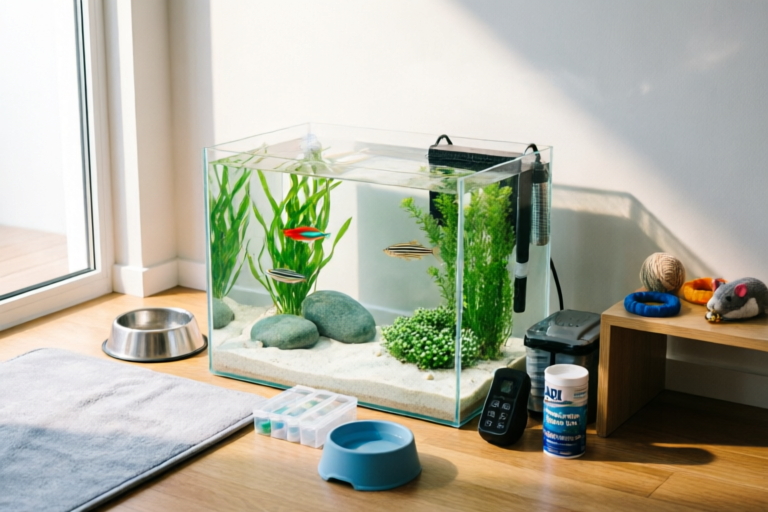
>Tropical fish typically require temperatures between 74°F and 80°F (23°C - 27°C). An adjustable submersible heater is non-negotiable for tropical communities. Match the wattage to your gallons-per-hour rating to ensure efficient heating. Regarding substrate, fine gravel or sand provides a natural look and allows plant roots to anchor. Darker substrates enhance the colors of the fish and plants. You also need lighting. LED lights are the modern standard; they are energy-efficient, produce less heat, and come in spectrums tailored for fish color enhancement or plant growth. If you plan to grow live plants, invest in higher-quality full-spectrum LEDs rather than basic fluorescent tubes.Water Testing Kits and Safety
Finally, never assume your water is safe. Tap water contains chlorine and chloramines harmful to fish gills. You need a water conditioner to neutralize these toxins instantly. More importantly, you need a liquid testing kit to monitor ammonia, nitrite, and nitrate levels. Strips are convenient but less accurate than drop-checkers. Accurate data is vital for diagnosing illness before it spreads. Don’t forget a siphon for water changes, a net with a soft mesh to avoid damaging fins, and a scrubber for algae on the glass. These tools turn maintenance into a manageable task rather than a chore.Cycling the Tank Before Adding Livestock
Perhaps the most misunderstood aspect of starting an aquarium is the nitrogen cycle. This biological process is the invisible engine that keeps your water breathable. Without it, ammonia produced by fish waste builds up rapidly, poisoning livestock. This phase cannot be rushed, and understanding it separates successful aquarists from those who repeatedly lose their fish.Understanding the Nitrogen Cycle Process
The nitrogen cycle converts toxic ammonia into less harmful substances via beneficial bacteria. When organic waste decomposes, it releases ammonia. Specialized colonies of bacteria colonize surfaces in the tank, particularly the filter media, substrate, and decorations. First, Nitrosomonas bacteria convert ammonia into nitrite, which is still highly toxic. Next, Nitrospira bacteria convert nitrite into nitrate. While nitrate is far less toxic, it still needs to be removed through water changes. During the cycling phase, ammonia and nitrite levels should be monitored closely. If both are zero and nitrate is rising, the cycle is complete.Steps to Cycle Efficiently
To establish these bacteria colonies, fill the tank with dechlorinated water and start your filter. Add a source of ammonia (fish food or pure ammonia solution) to feed the bacteria. Test daily. Do not add fish yet! Waiting six to eight weeks is standard. You can speed this up slightly by seeding the tank with bacteria from an established filter (bio-ball transfer from an old tank) if you have a friend, but patience remains the key. Some products claim to speed up cycling, but they merely introduce more bacteria rather than accelerating their growth rate. Trust the numbers on your test kit. When ammonia reads 0 ppm and nitrite reads 0 ppm after feeding, you are ready.The Dangers of Adding Livestock Early
It is tempting to see a beautiful empty tank and feel the urge to stock it immediately. Resist this urge. Adding fish before cycling causes “fish-in cycling,” which is stressful and dangerous for the animals as they essentially bathe in their own waste. High ammonia burns their gills and weakens their immune systems, leading to open sores and death. Proper cycling ensures that by day one, the colony is large enough to handle the bioload of your planned livestock. This period of waiting is an investment in the lives of your future pets.Selecting Hardy and Compatible Fish Species
Once the tank is cycled, the thrill of stocking begins. However, choosing fish is not just about picking pretty colors; it requires research into biology and behavior. A mismatched tank can lead to stress, aggression, and overcrowding, undoing months of effort.Researching Compatibility and Environment
Compatibility involves three factors: temperament, water parameter needs, and swimming space. Aggressive fish like Cichlids should not be kept with slow-moving, long-finned fish like Bettas. Bottom-dwellers (like Catfish) occupy the substrate layer, while mid-water schools (like Tetras) utilize the middle column, and surface dwellers (like Rasboras) stay high. Mixing these creates a balanced ecosystem. Check the pH, hardness, and temperature requirements. A South American community tank (acidic water) shouldn’t mix with African Rift Lake species (alkaline hard water) as the compromise would stress both groups.Beginner-Friendly Choices
For your first tank, prioritize hardiness and peace. Neon Tetras are classic choices; they are resilient if kept in groups of six or more. Platies and Mollies are colorful livebearers that breed easily and tolerate a wide range of water conditions. Corydoras Catfish are peaceful bottom cleaners that remove uneaten food. White Cloud Mountain Minnows are great for cooler water without heaters. Avoid goldfish in small tanks; they produce excessive waste and grow very large, outgrowing typical home aquariums quickly. Stick to native or adaptable species that have proven track records in captivity.Calculating Stocking Levels
Overcrowding is the number one mistake. A general guideline is one inch of adult fish length per gallon of water, though this varies by fish shape and activity level. Active fish need more swimming space. Always check the expected adult size of the species, not the juvenile size seen in stores. A small neon tetra stays small, but a tiger barb grows larger than initially anticipated. Leave ample gaps. Overstocking leads to poor water quality spikes and increased aggression. Less is almost always more when starting out. Build your population slowly as the tank matures.Establishing Routine Maintenance Habits
The longevity of your aquarium depends entirely on consistency. Once the fish arrive, your role shifts from builder to caretaker. Regular maintenance prevents crises and keeps the water crystal clear. Neglecting these habits allows sludge and toxins to accumulate silently until the system collapses.Regular Water Changes and Cleaning
Weekly water changes of 10-25% are mandatory. This removes accumulated nitrates and replenishes essential minerals that get depleted over time. Use a gravel vacuum to siphon detritus from the substrate while changing the water. Clean the glass to remove algae buildup for optimal viewing, but never use soap or chemicals, as residues are lethal to fish. Rinse your filter media in old tank water during changes. Never rinse filter sponge under tap water; the chlorine will kill the beneficial bacteria living inside, causing the filtration system to fail temporarily.Proper Feeding Schedules
Feeding is a delicate balance. Feed once or twice a day what the fish can consume in three minutes. Uneaten food sinks and rots, spiking ammonia. Skip one feeding day per week to help the fish’s digestive system rest. Different species eat differently; flakes float for top feeders, pellets sink for bottom feeders. Observe their appetite. If a fish looks bloated, reduce portions. Inconsistent feeding leads to health issues ranging from swim bladder disorders to organ failure. Keep a feeding log if necessary, noting which species finish their food versus which leave it behind.Monitoring and Long-Term Ecosystem Health
Keep a journal of your tank. Note water parameters every week. Track temperature stability. Document when you change bulbs, clean media, or treat illnesses. Patterns will emerge; perhaps your heater fluctuates in winter, or a specific algae outbreak happens every month. Troubleshooting becomes easier with data. Also, keep spare parts handy. If a filter dies, having a backup prevents shock to the system. Join local or online aquarium communities to exchange advice. Being proactive rather than reactive transforms aquarium ownership from a struggle into a sustainable passion. Conclusion Starting your first freshwater aquarium is a journey of discovery, patience, and responsibility. By meticulously assessing your space and budget, selecting the right equipment, allowing the tank to cycle properly, choosing compatible fish, and committing to routine maintenance, you lay the groundwork for a vibrant underwater ecosystem. Remember, an aquarium is a living mirror reflecting your commitment. It rewards care with beauty and tranquility. Avoid shortcuts, respect the nitrogen cycle, and enjoy the peaceful rhythm of watching life bloom in your home. With the right preparation today, your first freshwater aquarium will not just survive; it will thrive for years to come.Comments

QuietLife
maintenance schedule looks intense but i guess consistency is key. hope my cat doesn't knock over the tap!
👍 29👎 0

TankTopper
what substrate depth do you recommend for the beginner tanks? didn't see that covered much.
👍 16👎 0

GoldieGlow
works great so far! did 2 week cycle and added neon tetras today. fingers crossed 🤞
👍 10👎 0

AquascapeDan
the space assessment tip is gold. realized my dining room corner was too dark before buying anything.
👍 2👎 0

BrokeStudent
any cheap heater recommendations? broke college student trying to start small 🥺
👍 20👎 0
FishLoverJane
totally skipped the cycling step once and lost everyone 😭 reading this made me promise not to rush this time!
👍 12👎 0