The History and Mystery Behind the Turkish Angora Breed
The Turkish Angora, a breed of cat renowned for its elegance and grace, has captivated the hearts of many throughout history. This breed, with its striking appearance and captivating history, is steeped in mystery and lore. Originating from the region around Ankara (formerly known as Angora) in central Turkey, the Turkish Angora has been a subject of fascination for centuries. In this article, we will delve into the origins of this breed, its historical significance, and the myths and legends that have surrounded it.
Origins and Historical Significance
The Turkish Angora can trace its roots back to the time of the Ottoman Empire, where it was highly regarded for its beauty and agility. These cats were often found in the royal harems and were cherished by the sultans and their families. The breed’s origins date back thousands of years, with evidence suggesting that they have been present in the region since the days of the ancient Hittites. The first documented mention of the Turkish Angora dates back to the 16th century when European travelers noted their presence in the region.
During the reign of the Ottoman Empire, these cats were considered a symbol of luxury and wealth. They were often given as gifts to foreign dignitaries and rulers, further spreading their fame across the world. The Turkish Angora’s presence in royal courts is a testament to its regal status and the admiration it received from those who encountered it. The breed’s elegance and charm made it a favorite among the elite, and it became a symbol of power and prestige.
Myths and Legends
The Turkish Angora has also been the subject of numerous myths and legends, adding to its mystique. One popular legend tells of a white Turkish Angora cat named Muezza, a favorite of Prophet Muhammad. According to the story, when the Prophet was called to prayer, he found his cat sleeping on his sleeve. Rather than disturb the cat, he cut off the sleeve of his robe to avoid waking it. This tale highlights the special bond between humans and Turkish Angoras, emphasizing their importance in Islamic culture.
Another legend involves a Turkish Angora cat named Sinan, who was said to have saved the life of Sultan Selim III. During a hunting trip, the Sultan’s horse threw him into a river. Sinan, who had been riding on the Sultan’s shoulder, leaped into the water and swam alongside the Sultan until help arrived. This story underscores the loyalty and bravery of the Turkish Angora, qualities that have been admired throughout history.
Physical Characteristics and Unique Traits
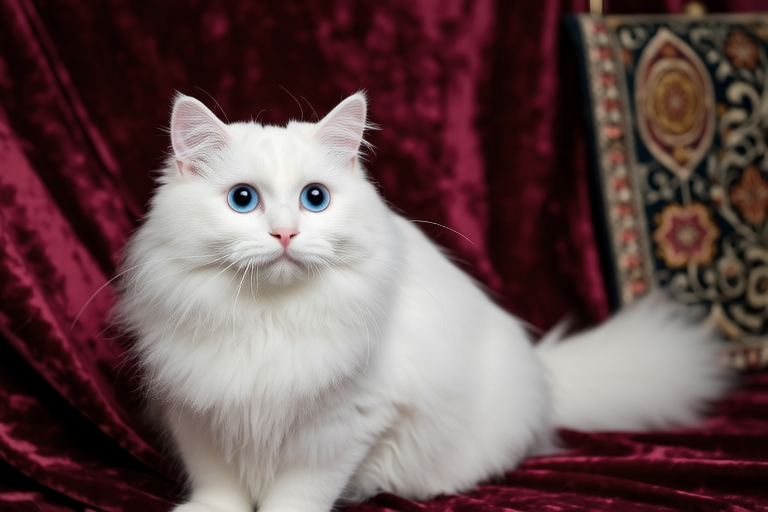
The Turkish Angora is easily recognizable by its distinctive appearance. It has a long, silky coat that comes in a variety of colors, though white is the most common. The breed’s large, pointed ears and piercing blue eyes give it an almost otherworldly look. Their slender bodies and graceful movements make them appear almost ethereal, contributing to their air of mystery.
One of the most notable features of the Turkish Angora is its semi-longhair coat, which requires regular grooming to maintain its lustrous sheen. The breed’s coat is fine and silky, with a soft undercoat that helps protect it from the cold. Turkish Angoras are also known for their exceptional jumping ability, which allows them to reach great heights with ease. This trait, combined with their agility, makes them excellent hunters and climbers.
Temperament
Turkish Angoras are known for their friendly and affectionate nature. They are highly social animals that thrive on human interaction and companionship. These cats are often described as being playful and curious, always ready to explore new environments and engage in activities with their owners. Their intelligence and adaptability make them ideal pets for households that can provide them with plenty of attention and stimulation.
Despite their playful nature, Turkish Angoras are also known for their independent streak. They are not overly demanding and can entertain themselves for short periods, but they do require regular interaction to prevent boredom. Their affectionate nature means they are often found seeking out their owner’s company, curling up beside them or following them around the house.
Preservation of the Breed
The Turkish Angora has been preserved as a distinct breed for centuries through careful breeding practices. In the early 20th century, efforts were made to protect the breed from extinction, particularly after World War I. A breeding program was established at the Ankara Zoo, where strict guidelines were implemented to ensure the purity of the breed. Only white Turkish Angoras with blue eyes were allowed to be bred, ensuring that the breed’s unique characteristics were maintained.
Today, the Turkish Angora is recognized by various cat registries, including the International Cat Association (TICA) and the Cat Fanciers’ Association (CFA). These organizations work to promote the breed and ensure that its unique traits are preserved for future generations. The breed’s distinctive appearance and charming personality continue to make it a favorite among cat enthusiasts worldwide.
Role in Different Periods of History
The Turkish Angora has played a significant role in different periods of history, from its presence in royal courts to its contribution to genetic studies. In addition to its popularity among the Ottoman sultans, the breed has been favored by royalty and aristocracy across Europe. The Turkish Angora’s elegant appearance and regal demeanor made it a sought-after pet for nobility, further cementing its reputation as a breed of distinction.
In more recent times, the Turkish Angora has contributed to genetic studies, helping researchers understand the genetic basis of certain traits. For example, studies have shown that the breed carries a gene for long hair, which is responsible for the semi-longhair coat that is characteristic of the Turkish Angora. These studies have provided valuable insights into the genetics of coat length in cats and have helped breeders develop new breeds with specific traits.
Conclusion
The Turkish Angora is a breed of cat that is rich in history and steeped in mystery. From its origins in ancient Turkey to its presence in royal courts and its role in genetic studies, this breed has captured the imagination of many throughout the ages. Its striking appearance, friendly temperament, and unique traits have made it a favorite among cat enthusiasts worldwide. As we continue to learn more about this fascinating breed, its legacy as a symbol of elegance and grace will undoubtedly endure for generations to come.
