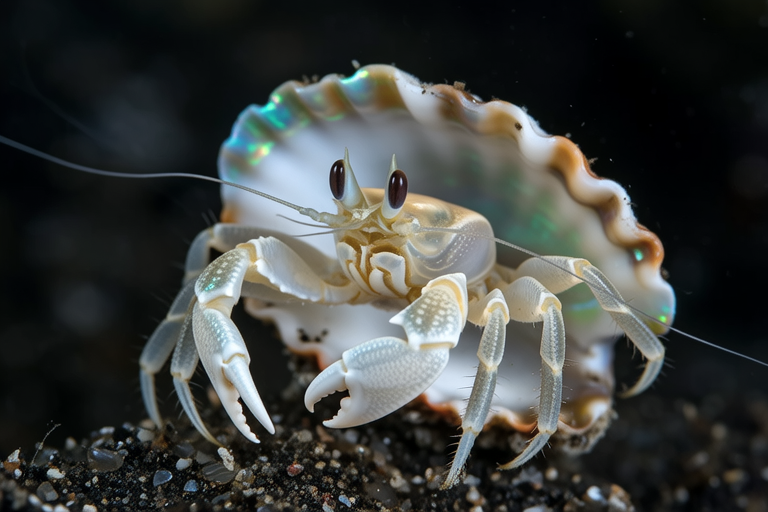
The Hidden Wonders of Pea Crabs: A Dive into Their Unique Ecosystems and Symbiotic Relationships
Welcome to the captivating world of pea crabs, tiny crustaceans that live within the bodies of other marine organisms. These creatures are a marvel of nature, showcasing unique adaptations and symbiotic relationships that have intrigued scientists for decades. Let’s dive into the microscopic realm of pea crabs and explore their habitat, survival strategies, and their role in marine ecosystems.
Microscopic Size and Habitat
Pea crabs are among the smallest crabs in the world, typically measuring less than half an inch in length. Their diminutive size allows them to inhabit the bodies of various marine animals, including bivalves, echinoderms, and even some fish. These hosts provide protection, food, and a stable environment for the pea crabs. The most common hosts are bivalves such as clams and oysters, where the crabs reside inside the shell cavity. In this cozy habitat, they enjoy a steady supply of nutrients from their host’s tissues and can reproduce safely without fear of predators.
Symbiotic Relationships
Pea crabs engage in a fascinating form of symbiosis with their hosts, known as parasitism. While it may sound harmful, the relationship is often mutually beneficial. The pea crab benefits from the protection and nourishment provided by its host, while the host receives a form of pest control. Pea crabs consume parasites and other small organisms that could potentially harm their host, thus contributing to the overall health of the marine ecosystem.
One of the most intriguing aspects of pea crab symbiosis is the way they adapt to their hosts. Female pea crabs often remain inside their host throughout their entire life cycle, while males leave the host to find mates. This behavior ensures that the female has a safe place to lay her eggs and protect them from external threats. Once the eggs hatch, the larvae enter the water column, where they search for new hosts to begin their lifecycle anew.
Adaptations for Survival
To thrive in their unique environment, pea crabs have developed several remarkable adaptations. Their flattened bodies allow them to fit snugly within the confines of their host’s shell or body cavity. Additionally, they possess long, thin legs that help them move efficiently through the narrow spaces within their host. These legs also enable them to reach the host’s tissues, where they can feed on nutrients and fluids.
Pea crabs have evolved specialized mouthparts that allow them to extract nutrients from their host’s tissues. These mouthparts are highly efficient at breaking down and absorbing the necessary components for their survival. Furthermore, their exoskeletons are often transparent or semi-transparent, allowing them to blend in with their host’s body and avoid detection by potential predators.
Role in Marine Ecosystems
Despite their small size, pea crabs play a crucial role in maintaining the balance of marine ecosystems. By controlling parasite populations and providing pest control for their hosts, they contribute to the overall health of their habitats. Additionally, their presence can serve as an indicator of the ecological health of an area. If pea crabs are thriving, it suggests that the local ecosystem is functioning well and that there is a sufficient abundance of suitable hosts.
Pea crabs also participate in nutrient cycling within their ecosystems. As they consume organic matter and other small organisms, they release waste products that can be used by other marine life. This process helps to maintain the delicate balance of nutrients in the surrounding waters, ensuring that all organisms have access to the resources they need to survive and thrive.
Reproduction Methods
The reproductive cycle of pea crabs is both complex and fascinating. Female pea crabs typically mate once in their lifetime, usually during the summer months when water temperatures are warmest. After mating, the female carries the fertilized eggs beneath her abdomen until they hatch. The number of eggs produced varies depending on the species and the size of the female, but it can range from a few dozen to several hundred.
Once the eggs hatch, the larvae enter the water column, where they drift for a short period before seeking out new hosts. This stage of their lifecycle is particularly vulnerable, as the larvae are exposed to numerous predators and environmental challenges. However, those that successfully find a host will grow and develop into adult pea crabs, continuing the cycle of life.
Recent Scientific Discoveries
In recent years, scientists have made several exciting discoveries regarding pea crabs. One of the most significant findings is the identification of new species of pea crabs, expanding our understanding of the diversity within this group. Researchers have also uncovered previously unknown details about their behavior and interactions with their hosts, shedding light on the complexities of their symbiotic relationships.
Advancements in genetic analysis techniques have allowed scientists to study the evolutionary history of pea crabs more closely. These studies have revealed that pea crabs share common ancestors with other crabs and have adapted to their unique lifestyle over millions of years. Additionally, researchers have discovered that some species of pea crabs have developed resistance to certain chemicals produced by their hosts, enabling them to survive in environments that would otherwise be inhospitable.
Conservation Status
Fortunately, pea crabs are not currently considered endangered or threatened. However, the health of their ecosystems remains a concern due to human activities such as pollution, overfishing, and habitat destruction. Conservation efforts focused on protecting marine environments and promoting sustainable fishing practices can help ensure the continued existence of pea crabs and their hosts.
Efforts to raise awareness about the importance of pea crabs and their role in marine ecosystems are also essential. By educating the public and policymakers about the value of these tiny creatures, we can work together to preserve their habitats and promote the overall health of our oceans.
Conclusion
The world of pea crabs is a testament to the incredible diversity and complexity of marine ecosystems. These tiny crustaceans, with their microscopic size, unique habitat, and fascinating adaptations, offer a glimpse into the hidden wonders of the sea. Through their symbiotic relationships and vital roles in nutrient cycling, pea crabs play a crucial part in maintaining the balance of marine ecosystems. As we continue to learn more about these hidden wonders, it becomes increasingly clear that preserving their habitats and protecting their ecosystems is essential for the health of our oceans.
