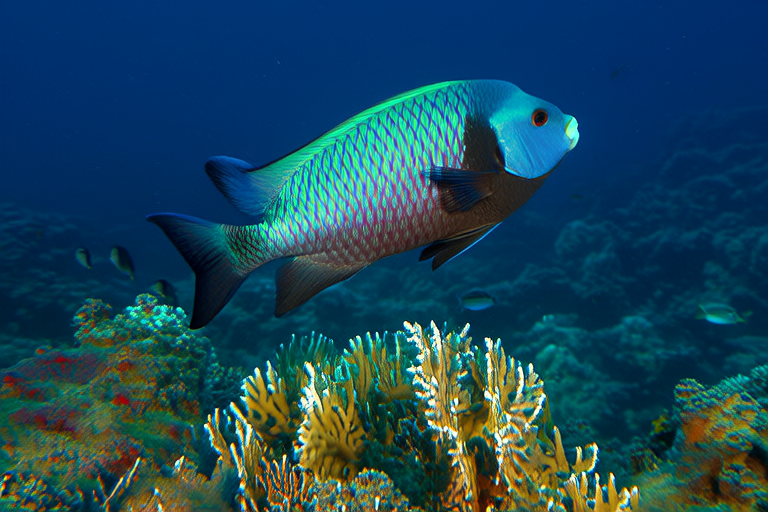
How Parrot Fish Are Shaping Coral Reefs and Saving Our Oceans
In the vibrant world of marine life, few creatures stand out more than the parrot fish. These colorful, charismatic fish play a pivotal role in maintaining the health of coral reefs, which are some of the most diverse and vital ecosystems on Earth. With their distinctive beak-like mouths, parrot fish are known for their unique grazing habits, which not only shape the physical structure of reefs but also contribute significantly to their overall health and biodiversity.
The Role of Parrot Fish in Coral Reef Ecosystems
Parrot fish are found in tropical and subtropical waters around the globe, where they spend much of their time feeding on algae that grow on coral surfaces. Their diet primarily consists of filamentous and calcareous algae, which they scrape off using their specialized teeth. These teeth are fused into a beak-like structure, allowing them to efficiently graze on algae without damaging the underlying coral. This process is crucial for the survival of coral reefs, as unchecked algal growth can quickly smother and kill corals, leading to a decline in reef health.
A study published in the journal Ecology Letters (2012) demonstrated that areas with higher densities of parrot fish had healthier coral reefs, with lower levels of algal cover and greater coral diversity. The researchers found that parrot fish not only prevent algal overgrowth but also help recycle nutrients back into the ecosystem through their excretions, promoting the growth of new coral polyps.
Symbiotic Relationship Between Parrot Fish and Coral Reefs
The relationship between parrot fish and coral reefs is symbiotic, meaning both parties benefit from their interaction. While parrot fish rely on coral reefs for food and shelter, coral reefs depend on parrot fish for their maintenance and survival. By controlling algal growth, parrot fish ensure that corals have enough space and light to thrive, which in turn supports a wide variety of marine species that depend on the reef for habitat and food.
Moreover, parrot fish contribute to the physical structure of coral reefs through their feeding activities. As they scrape algae off coral surfaces, they inadvertently chip away at the calcium carbonate skeleton of the reef. This process, known as bioerosion, helps break down old coral material, releasing particles that can be used to build new coral structures. A study conducted by the University of California, Santa Barbara (2015) estimated that parrot fish can contribute up to 30% of the sedimentation in coral reef environments, playing a critical role in the reef’s ongoing development and regeneration.
Threats to Parrot Fish Populations and Their Impact on Coral Reefs
Despite their importance to coral reef ecosystems, parrot fish populations face numerous threats, including overfishing and habitat loss. Many species of parrot fish are highly valued in commercial and recreational fishing, making them vulnerable to overexploitation. In some regions, parrot fish are targeted for their meat, while others are caught for the aquarium trade. Overfishing can lead to a significant reduction in parrot fish numbers, which can have devastating effects on coral reefs.
Habitat loss, primarily due to coastal development and pollution, further exacerbates the problem. Coral reefs are often damaged or destroyed by human activities, leaving fewer suitable habitats for parrot fish to live and feed. Additionally, climate change poses a threat to both parrot fish and coral reefs, with rising sea temperatures causing coral bleaching events that can severely impact reef health.
Research published in the Proceedings of the National Academy of Sciences (2018) highlighted the critical role of parrot fish in mitigating the effects of climate change on coral reefs. The study found that reefs with healthy parrot fish populations were better able to recover from bleaching events compared to those without. This underscores the importance of protecting parrot fish and preserving their role in reef ecosystems.
Conservation Efforts and Actions to Protect Parrot Fish and Coral Reefs
To address the threats facing parrot fish and coral reefs, various conservation efforts are underway. Marine protected areas (MPAs) have been established in many regions to provide safe havens for parrot fish and other marine species. These areas restrict fishing activities and allow populations to recover, ensuring that parrot fish can continue to fulfill their ecological roles.
Additionally, sustainable fishing practices are being promoted to reduce the pressure on parrot fish populations. Initiatives such as catch limits, size restrictions, and gear modifications aim to minimize the number of parrot fish caught while allowing for the continued harvest of other species. Public awareness campaigns are also being launched to educate people about the importance of parrot fish and the need to protect them.
Individuals can also take action to support parrot fish conservation. Reducing plastic waste and participating in beach cleanups can help protect coral reefs from pollution. Supporting sustainable seafood choices and avoiding products made from endangered species can also make a difference. Furthermore, advocating for stronger environmental policies and supporting organizations dedicated to marine conservation can help ensure the future of parrot fish and coral reefs.
Conclusion
Parrot fish play a vital role in shaping and maintaining the health of coral reefs, which are essential for the well-being of our oceans. Through their grazing habits and bioerosion activities, parrot fish help control algal growth, recycle nutrients, and contribute to the physical structure of reefs. However, threats such as overfishing and habitat loss pose significant challenges to their survival and the health of coral reefs.
By understanding the importance of parrot fish and taking action to protect them, we can help ensure the continued vitality of coral reefs and the countless species that depend on them. Together, we can work towards a future where parrot fish and coral reefs thrive, contributing to the health and beauty of our oceans for generations to come.
