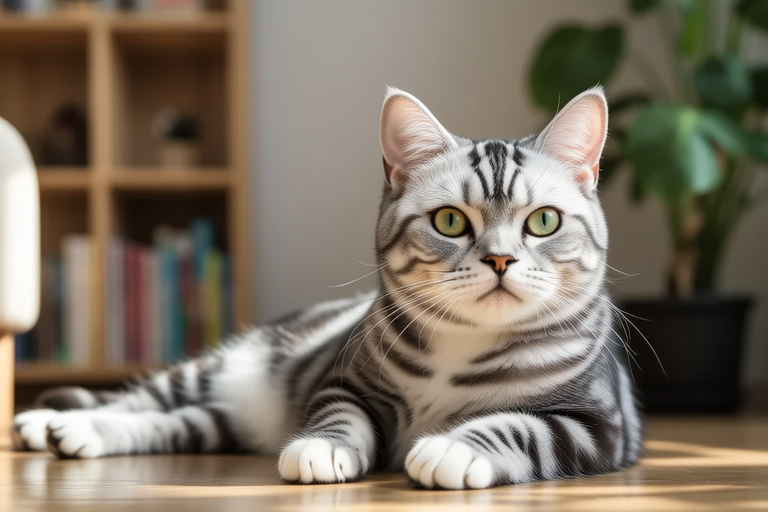
Unraveling the Mystery Behind the American Shorthair’s Unique Coat Patterns
The American Shorthair (ASH) is one of the most beloved and popular cat breeds in the United States, with a rich history dating back to the early days of American settlement. These cats are known for their robust health, gentle temperament, and striking appearance. The American Shorthair’s origins can be traced to the sturdy, working cats brought to North America by European settlers. Over centuries, these felines adapted to the harsh conditions of the New World, developing into a breed recognized for its hardiness and resilience. Today, the American Shorthair is celebrated for its diverse and beautiful coat patterns, which are as intriguing as they are aesthetically pleasing.
The Genetic Blueprint: Understanding Coat Patterns
The variety of coat patterns seen in American Shorthairs is the result of complex genetic interactions. At the heart of this diversity lies a set of genes that determine fur color and pattern. Among these, the Agouti gene plays a crucial role in producing the classic tabby markings, while other genes contribute to solid colors and bi-color patterns. Let’s delve deeper into these genetic factors.
The Agouti gene is responsible for the characteristic tabby stripes. This gene determines whether a cat’s fur will display a banded coloration, resulting in the distinctive tabby pattern. There are several types of tabby patterns, including mackerel, classic, spotted, and ticked. Each of these patterns is determined by variations in the Agouti gene and other modifier genes. For instance, the mackerel tabby, characterized by narrow, parallel stripes, is the most common among American Shorthairs. In contrast, the classic tabby has swirling patterns resembling a bullseye, while the ticked tabby displays bands of color along individual hairs.
For solid-colored coats, a different set of genes comes into play. Solid colors, such as black, blue, red, and cream, are the result of recessive alleles at the Extension locus. These alleles prevent the expression of any tabby patterns, leading to a uniform color throughout the coat. Bi-color patterns, on the other hand, are influenced by the piebald gene, which introduces white patches into the coat. The degree of white can vary widely, from small spots to extensive areas of white fur.
The Evolution of Coat Patterns: Survival and Adaptation
The evolution of coat patterns in American Shorthairs is closely tied to their survival and adaptation to various environments. Historically, these cats were valued for their hunting prowess, particularly in controlling rodent populations. Different coat patterns may have provided selective advantages under varying environmental pressures. For example, the mackerel tabby pattern, with its distinct stripes, might have helped these cats blend into their surroundings, making them less visible to prey and predators alike.
Studies have shown that certain coat patterns can offer camouflage benefits, especially in environments with dense vegetation or varied terrain. In agricultural settings, where rodents were abundant, cats with more effective camouflage patterns would likely have had a higher survival rate and reproductive success. Over generations, these advantageous traits became more prevalent within the population, contributing to the genetic makeup of today’s American Shorthairs.
Anecdotes and Studies Illuminating Coat Genetics
One fascinating study conducted by geneticists examined the inheritance of coat patterns in American Shorthairs. By analyzing pedigrees and observing offspring from specific matings, researchers were able to map out the genetic pathways responsible for various coat patterns. They discovered that certain combinations of genes consistently produced particular patterns, providing valuable insights into the breed’s genetic heritage.
Anecdotal evidence also highlights the unique coat patterns found within the American Shorthair breed. One breeder recounted the story of a litter where every kitten exhibited a rare and striking pattern. This litter, born from two standard-bred parents, showcased the surprising variability that can occur within the breed. Such occurrences underscore the complexity of genetic inheritance and the potential for unexpected outcomes.
The Beauty and Uniqueness of Each Coat Pattern
Each American Shorthair boasts a coat pattern that is uniquely its own, reflecting the intricate interplay of genetics and evolutionary history. From the bold stripes of a mackerel tabby to the serene elegance of a solid-colored cat, every pattern contributes to the breed’s charm and appeal. The diversity within the American Shorthair breed is a testament to nature’s creativity and the resilience of these feline companions.
In conclusion, the American Shorthair’s coat patterns are not just visually appealing but also carry a wealth of genetic and historical significance. By appreciating the beauty and uniqueness of each coat, we gain a deeper understanding of the breed’s past and present. Whether you’re a seasoned cat enthusiast or a casual admirer, there is much to marvel at in the world of American Shorthair coat patterns. Embrace the diversity and celebrate the individuality of each American Shorthair, for it is in their differences that their true beauty shines through.
