How to Properly Bathe Your Dog at Home
Keep Your Pup Clean and Happy at Home
Introduction to Bathing Your Dog at Home
Bathing your dog at home can be an enjoyable experience for both you and your pet, provided you follow the right steps. Regular grooming not only keeps your dog clean but also promotes their overall health and hygiene. While professional groomers are skilled at their job, there are several benefits to bathing your dog at home. It can save money, allow you to bond with your pet, and ensure that you know exactly what products are being used on them.
To achieve a successful at-home bath, it’s essential to gather all the necessary tools and supplies beforehand. These include a dog-specific shampoo, towels, a brush, a rubber mat, and possibly a blow dryer if your dog is tolerant of it.
Preparing for the Bath
Choosing the Right Time and Place
Select a quiet time when your dog is calm and relaxed. Avoid bathing your dog right after they’ve eaten or exercised vigorously. As for location, choose a spot where you won’t have to move your dog too far once wet. A bathroom with a non-slip surface works well.
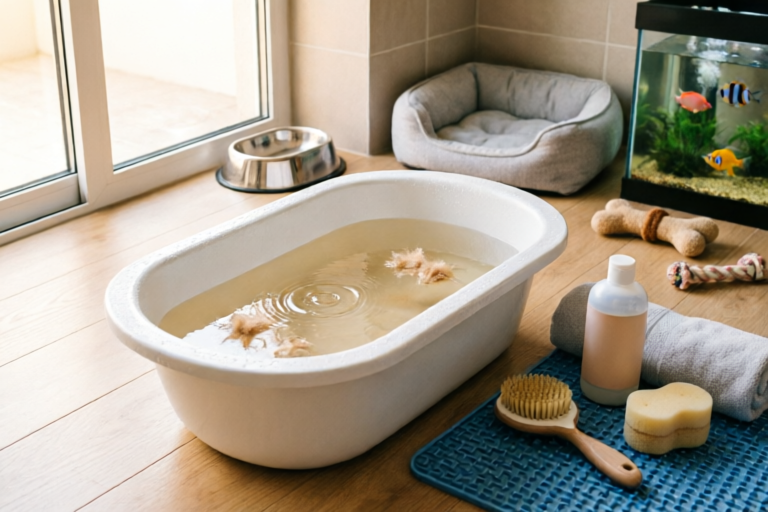
Gathering Necessary Supplies
Before you start, make sure you have everything you need:
- Dog-specific shampoo (avoid human shampoos as they can be too harsh)
- Towels or a large bath towel
- A rubber mat or nonskid pad for safety
- A soft-bristled brush or comb
- Ear cleaning solution (optional)
- A cup or pitcher for pouring water over your dog
Ensuring Your Dog is Comfortable with Water
If your dog isn’t used to water, gradually introduce them by letting them stand in shallow water. Use treats and positive reinforcement to make this experience pleasant.
Step-by-Step Guide to Bathing Your Dog
Wetting Your Dog Thoroughly
Start by wetting your dog from the neck down, avoiding the face. Use lukewarm water and be gentle. If your dog is nervous about the water, try using a spray nozzle or a cup to pour water over them rather than directing the stream directly from the faucet.
Applying Shampoo
Apply a small amount of dog shampoo to your hands and work it into a lather. Focus on areas prone to dirt, such as the paws, underbelly, and rear end. Be careful around the eyes and ears. For sensitive areas, you might want to use a separate, mild shampoo.
Lathering Up and Focusing on Key Areas
Make sure to lather up thoroughly, paying special attention to areas that tend to get dirty, like the paws, underbelly, and rear end. Don’t forget to gently clean inside the ears, but avoid inserting anything deep into the ear canal.
Rinsing Thoroughly
Thorough rinsing is crucial to prevent any shampoo residue from irritating your dog’s skin. Use lukewarm water and rinse until no suds remain. Check for any remaining soap by running your hand over your dog’s coat.
Drying and Post-Bath Care
Using Towels or a Blow Dryer Safely
After rinsing, gently pat your dog dry with towels. For long-haired breeds, you may need to use multiple towels. If your dog tolerates it, you can use a blow dryer set on low heat and a cool setting. Always keep the dryer moving to avoid hot spots.
Brushing Out Tangles After the Bath
Once your dog is mostly dry, brush out any tangles or mats in their fur. This step is especially important for long-haired dogs.
Rewarding Your Dog for Good Behavior
Praise your dog throughout the bathing process and offer treats as a reward for good behavior. Positive reinforcement will help your dog associate bath time with something enjoyable.
Tips for Handling Difficult Dogs
Strategies for Bathing Anxious or Resistant Dogs
If your dog is anxious or resistant, try breaking the process into smaller steps. Start by getting them used to standing in the tub without water, then gradually introduce water. Use lots of treats and praise to keep them calm.
Techniques for Managing Large or Slippery Breeds
Large dogs can be challenging to manage in the tub. Consider using a handheld showerhead or a cup to pour water over them instead of spraying directly from the faucet. For slippery breeds, a non-slip mat can provide extra traction.
Preventing Common Issues Like Ear Infections
After bathing, gently dry your dog’s ears with a cotton ball. Avoid inserting anything into the ear canal. If your dog has a history of ear infections, consult your vet for a medicated ear cleaner.
Conclusion: Maintaining Regular Grooming Habits
Establishing a routine for your dog’s grooming schedule is key to keeping them healthy and happy. Most dogs benefit from a bath every 4-8 weeks, depending on their breed, lifestyle, and coat type. Signs that your dog may need more frequent baths include excessive shedding, a strong odor, or visible dirt.
Encourage positive experiences through rewards and praise. With patience and practice, you and your dog can enjoy bath time together!
Comments

My dog has sensitive skin. Should I use a special shampoo?

Followed these steps and my shepherd came out smelling great! Thanks!

Great guide! My husky is super slippery, any extra tips for him?

I used a blow dryer but my dog got too hot. Any advice?

This helped a lot! My chihuahua was so scared but I used treats and now he's a bit calmer.

My dog hates baths. Any tips for making it less stressful?
I tried this with my golden retriever and it worked great! Just make sure you have plenty of towels on hand, they shake off so much water.