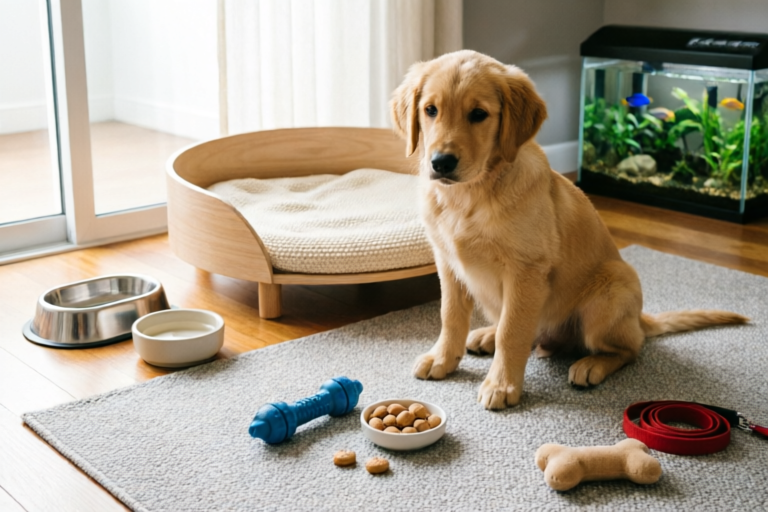
Positive reinforcement is widely regarded as the gold standard in modern dog training, transforming the way we teach our four-legged friends to navigate their world. If you have recently brought home a fluffy bundle of energy, you know the joy comes with challenges. From chewed shoes to nighttime whining, the early months define the trajectory of your relationship. However, the landscape of dog training has shifted dramatically away from dominance-based theories toward a model rooted in kindness, science, and mutual respect.
Training your puppy using positive reinforcement does not mean avoiding discipline; rather, it focuses on encouraging desired behaviors through rewards, making them want to repeat those actions willingly. This approach strengthens the bond between owner and dog, creating a happy, confident animal who listens because they choose to, not because they fear punishment. In this comprehensive guide, we will explore how to implement these techniques effectively today, setting you up for success in creating a polite and well-adjusted companion.
## Understanding the Core of Positive Reinforcement
To master puppy training, one must first understand the psychological foundation upon which positive reinforcement rests. At its simplest, positive reinforcement is a concept derived from operant conditioning, a principle introduced by psychologist B.F. Skinner. The core idea is straightforward: behaviors followed by favorable consequences become more likely to occur in the future. Conversely, behaviors that are ignored or punished tend to decrease in frequency.
### Rewarding Desired Behaviors vs. Punishment
In traditional, outdated methods, owners might yank a leash or scold a puppy for jumping on guests. While this might stop the jumping momentarily, it often creates confusion and anxiety. Dogs do not always understand *why* they were punished, leading to stress or even defensive aggression. Furthermore, punishment only suppresses behavior temporarily; it rarely teaches the dog what to do instead.
Positive reinforcement flips the script. Instead of focusing on what the puppy did wrong, you capitalize on what they did right. When your puppy sits calmly instead of jumping, you offer a treat. When they chew their own toy instead of your furniture, you praise them. This clarity accelerates learning. By associating specific actions with pleasurable outcomes—whether food, toys, or affection—you create a roadmap for success in the puppy’s mind.
### The Psychology Behind Motivation
Why does this work better than force? Humans and dogs share an evolutionary history of social living. Both species learn rapidly through observation and consequence. Puppies are naturally curious and eager to please their pack leaders (us). When we utilize positive reinforcement, we tap into their desire for social validation and physical rewards. It activates the reward centers in their brains, releasing dopamine, which reinforces the neural pathways associated with the correct behavior. Over time, this builds confidence. A trained dog that understands expectations feels secure and intelligent, whereas a dog trained through fear remains hesitant and unsure.
Moreover, positive reinforcement prevents the buildup of resentment. A dog that fears its owner may obey, but it will not look to the owner for guidance during stressful situations. A dog trained with kindness looks to their human for cues and feels safe exploring boundaries, resulting in a lifelong partnership built on trust.
## Setting Up for Early Training Sessions
Success in puppy training is largely about preparation. You cannot expect your dog to succeed if the environment is overwhelming, or if the tools you are using are ineffective. Before you issue your first command, you must lay the groundwork for a productive learning session.
### Gathering High-Value Treats
Not all treats are created equal. During initial training sessions, standard kibble from their bowl might suffice, but as you move to more distracting environments, you need high-value rewards. High-value treats are small, smelly, and soft, allowing for rapid consumption so the training flow isn’t broken. Examples include boiled chicken, cheese cubes, freeze-dried liver, or commercial training treats specifically designed to be highly palatable.
Crucially, the reward must be something your puppy loves enough to ignore their surroundings for. Test this beforehand: drop the treat near them in a quiet room. If they don’t eat it immediately, it is not high-value enough for training purposes. Having a variety of treats allows you to swap them up depending on the difficulty of the command, keeping engagement high throughout the session.
### Choosing the Right Environment
The setting plays a pivotal role in attention span. Puppies have short attention spans, often lasting only a few minutes. Starting in a busy backyard or a noisy kitchen with a vacuum running is a recipe for failure. Begin training in a quiet, enclosed area with minimal distractions. A carpeted room in a hallway or a fenced corner of the living room is ideal.
As your puppy masters a command in a quiet zone, you gradually introduce mild distractions. Walk to the living room, then to the garden, eventually moving to a park. This progression is known as generalization. If you train only in one specific location, your dog may only behave in that specific spot. By varying the environment systematically, you ensure the training sticks regardless of where you are.
### Timing Your Training for Peak Attention
Puppies follow biological rhythms similar to toddlers. They thrive on routine but also have bursts of energy interspersed with naps. Trying to train a puppy right after they wake up can lead to hyperactivity, while training right before bed might result in sleepiness. Identify your puppy’s peak activity times. Typically, this is shortly after a walk when they are alert but not exhausted, or a couple of hours after eating.
Keep sessions short. Five to ten minutes per day is sufficient for a young puppy. Quality outweighs quantity. Three successful five-minute sessions yield better results than one frustrated twenty-minute marathon. Always end on a positive note. If your puppy struggles with a trick, help them achieve it easily once more so they finish feeling accomplished, then call it a day. This leaves them anticipating the next session rather than dreading it.
## Implementing Basic Command Training
Once the groundwork is set, you can begin working on the essential cues that every well-mannered dog needs. These commands form the foundation of safety and control in daily life. We will break down the step-by-step techniques for teaching the Sit, Stay, and Come, utilizing consistent verbal signals and immediate rewards.
### Teaching the Sit Command
The "sit" is often the first command taught because it is a calm, manageable position for a hyperactive puppy.
**Step 1:** Stand in front of your puppy holding a high-value treat in your closed fist. Bring the treat close to their nose.
**Step 2:** Slowly move your hand upward and slightly back over their head. As their nose follows the treat, their bottom will naturally lower to the ground to maintain balance.
**Step 3:** The moment their bottom touches the floor, say the marker word “Yes!” or “Good!” and immediately give them the treat.
**Step 4:** Add the verbal cue. Once they consistently associate the movement with the sit action, introduce the word “Sit” right before you lift your hand.
**Troubleshooting:** Some puppies might stand on their hind legs or spin around. Keep the treat higher and further back to encourage a true downward motion. If they jump, lower your hand and reset. Be patient and repetitive.
### Mastering the Stay
The “stay” command teaches impulse control, which is vital for preventing bolting out doors or chasing mail carriers.
**Step 1:** Start with your puppy already sitting. Show the palm of your hand towards them in a “stop” gesture and say “Stay.”
**Step 2:** Take a single step backward. Immediately return to them and reward, *before* they break the stay themselves. If you wait until they get distracted, you aren’t teaching patience.
**Step 3:** Gradually increase the distance and duration. Step back two feet, hold for three seconds, return and reward. Eventually, try adding a hand release cue (like “Okay!”) to signal when they are free to break the stay.
**Crucial Tip:** Do not simply walk away and wait for them to figure it out. The act of returning and rewarding them *while* they are still staying reinforces the concept that good behavior = staying put. Never punish a broken stay; instead, take a step back in training difficulty.
### Bringing Them Back with a Recall
A reliable recall is arguably the most important safety command. “Come” should be associated with life’s best things.
**Step 1:** Have a helper hold your puppy while you kneel a few feet away, showing excitement. Clap your hands and say “Come!”
**Step 2:** When they arrive, explode in praise and give a huge reward. Make arriving to you the most exciting event of their day.
**Step 3:** Gradually increase the distance. Practice in different rooms, then in the yard.
**Avoid:** Never use the word “come” for negative reasons, such as ending playtime, calling them away from a friend, or scolding them. If coming to you always ends the fun or brings a lecture, they will hesitate to return next time. If they must come to you for a bath, call them, reward them, and then gently handle them. Separating the command from the consequence is key to building trust.
## Addressing Common Puppy Challenges
Even with positive reinforcement, challenges will arise. Behavioral issues like nipping, destructive chewing, and potty accidents are normal developmental stages. The key is to address them through redirection rather than scolding, understanding that a puppy lacks adult inhibition.
### Managing Nipping and Mouthing
Young puppies explore the world with their mouths. Play biting is normal, but it must be managed before they grow too large. When a puppy bites your skin, it hurts. The reaction should be immediate but non-violent.
**Technique:** Yelp loudly (simulating a littermate saying “outch!”) and freeze your body. Stop all interaction for thirty seconds. This mimics natural feedback received from other dogs. If they bite again, walk away completely.
**Redirection:** After the timeout, offer a chew toy. When they gnaw on the toy, praise enthusiastically. This teaches them that hands are forbidden, but chew toys are welcome outlets for their jaw strength.
### Preventing Destructive Chewing
Teething causes discomfort, driving puppies to chew everything to relieve pain. If left unchecked, chewing furniture becomes a habit.
**Environment Management:** Puppy-proof your home. Remove access to valuable items or use baby gates. Provide an abundance of appropriate chew toys. Rotate toys frequently to keep them novel and interesting.
**The Swap:** If you catch them chewing a shoe, do not yell. Calmly say “Ah-ah,” remove the shoe, and replace it with a frozen Kong stuffed with peanut butter. The cold soothes gums, and the texture satisfies the urge. Consistently swapping prohibited items for approved ones reshapes their preference without damaging the relationship.
### Navigating Housebreaking
Potty training relies on consistency and supervision rather than punishment for accidents. If you find urine on the floor, you are too late to teach anything. Scolding a puppy for doing their business is counterproductive; they associate the scolding with your presence, not the act itself.
**Routine:** Take your puppy outside immediately after waking up, after eating, after play, and after napping. Choose a specific potty spot so the scent triggers the behavior.
**Rewards:** The moment they eliminate outdoors, mark the behavior with a cheerful “Yes!” and lavish them with treats and praise *while* they are still outside. This links the action to the reward instantly.
**Accidents:** If you catch them in the act, interrupt with a sharp clap or sound, pick them up immediately, and rush them outside to finish. Clean indoor accidents with an enzymatic cleaner to remove odors that might tempt them to revisit the spot.
## Establishing Habits for Lifelong Learning
The journey doesn’t end once your puppy learns the basics. The goal is to cultivate a mindset of continuous learning and adaptability. Positive reinforcement must evolve as the dog matures to sustain the progress made during those critical early months.
### Maintaining Consistency Among Family Members
One of the biggest pitfalls in dog training is inconsistency among household members. If Mom teaches “off” means off the couch, but Dad allows jumping up when guests arrive, the puppy becomes confused and defaults to the behavior that offers the best reward (attention from Dad).
Hold a family meeting. Agree on the rules: Is the dog allowed on furniture? What commands are mandatory at the door? Who walks the dog? Everyone must enforce the same vocabulary and standards. If a rule exists, it must apply universally. Inconsistency undermines the positive reinforcement framework because the dog never knows the outcome is predictable.
### Phasing Out Treats Strategically
A common concern is: “What happens when I run out of treats?” Ideally, you never truly run out of rewards, but you change *what* you reward. Treats are fantastic for learning new skills, but they cannot be used 100% of the time forever, or the behavior becomes transactional.
Transition to intermittent reinforcement. Once a behavior is mastered, move from treating every time to treating randomly. One time you give a treat, the next time you give a jackpot, the next time just verbal praise. Mix real-life rewards into the equation. If they sit at the table before dinner, ask them to sit, then feed them their actual dinner bowl rather than a treat. If they come when called, immediately unleash them to sniff the trees or play with a friend. Life becomes the reward. This ensures your dog obeys even when a treat pouch isn’t visible.
### Sustaining Behavioral Progress
Positive reinforcement is not a quick fix; it is a lifestyle. Even mature dogs benefit from ongoing training sessions. Mental stimulation reduces boredom and associated behavioral problems like excessive barking. Incorporate trick training, puzzle toys, and agility games into regular routines.
Furthermore, remain observant. Just as humans have bad days, dogs might regress due to illness, environmental changes, or hormonal shifts. Maintain patience. If skills slip, review the basics with kindness rather than frustration. The bond formed through this process creates a resilient foundation. A dog trained through positive methods is generally more adaptable to new experiences, travel, and strangers because they view novelty as an opportunity for reward rather than a threat.
### Building a Lifelong Partnership
Ultimately, training is about communication. By using positive reinforcement, you are speaking your dog’s language fluently. You are demonstrating that you listen to them, that you protect them, and that you celebrate their successes together. This emotional connection is what makes the difference between a pet that merely lives with you and a companion who shares your life.
As your puppy grows into a fully grown dog, remember that the principles established in those first weeks continue to guide the relationship. Consistency breeds confidence, kindness breeds loyalty, and patience breeds wisdom. Whether teaching a complex trick or managing a simple everyday behavior, the method remains the same: catch them being good, mark that moment, and reward the choice.
## Conclusion
Transforming a chaotic, energetic puppy into a calm, obedient adult requires dedication, but the path is paved with love, not force. Positive reinforcement techniques offer a scientifically backed, humane, and effective route to achieving this transformation. By understanding the core concepts, preparing your environment, mastering basic commands, addressing challenges with redirection, and committing to lifelong habits, you set the stage for a harmonious coexistence.
Start today. Gather your high-value treats, clear your schedule for five minutes of focused connection, and watch your puppy blossom into the partner you envisioned. Remember, the ultimate goal of training is not perfection in execution, but a lifetime of understanding, trust, and shared joy. With every session, you are investing in a relationship that will bring happiness to your home for years to come. Embrace the challenge, enjoy the journey, and celebrate every wag of the tail along the way. Your future best friend is waiting to learn from you, and you from them.
By adhering to these guidelines, you are not just training a dog; you are shaping a character. And in doing so, you become the kind of leader a dog wants to follow. So, grab those treats, open your heart, and begin the rewarding work of positive reinforcement training today.