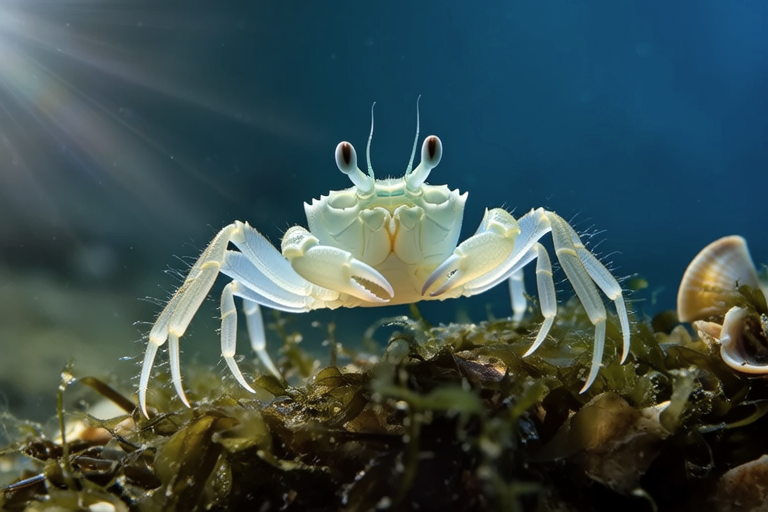
The Unique Life Cycle and Ecological Role of the Pea Crab
The pea crab (Pinnotheres) is a fascinating marine crustacean that captivates both scientists and nature enthusiasts alike. Despite its diminutive size, this crab plays a crucial role in the marine ecosystem, particularly through its symbiotic relationships with various sea creatures. This article delves into the life cycle, ecological significance, and unique characteristics of the pea crab, emphasizing its vital role in maintaining biodiversity.
A Symbiotic Symphony: The Pea Crab’s Partnerships
Pea crabs have established remarkable symbiotic relationships with several sea creatures, most notably sea anemones and hermit crabs. These partnerships are mutually beneficial, enriching the lives of both parties involved.
Sea Anemone Symbiosis
In its juvenile stage, the pea crab often seeks refuge within the protective tentacles of sea anemones. This arrangement provides the crab with shelter from predators and access to nutrients through the anemone’s feeding process. In return, the pea crab offers protection against small parasites that might otherwise harm the anemone. This relationship exemplifies mutualism, where both species benefit from the association.
Hermit Crab Companionship
As the pea crab matures, it frequently moves into the shell occupied by a hermit crab. Here, the pea crab benefits from the protection afforded by the hermit crab’s mobile home, while the hermit crab enjoys enhanced cleaning services as the pea crab feeds on detritus and parasites within the shell. This dynamic duo showcases another form of symbiosis, known as commensalism, where one species benefits without significantly impacting the other.
Habitat: From Shallow Coasts to Deep Trenches
The pea crab thrives in diverse aquatic environments, ranging from shallow coastal waters to the depths of ocean trenches. Its adaptability allows it to inhabit regions such as coral reefs, estuaries, and even submarine canyons. This wide-ranging habitat contributes to its ecological importance, as it influences nutrient cycling and supports food webs across different ecosystems.
Misconceptions and Reality: The Pea Crab on Your Plate?
Contrary to popular belief, pea crabs are rarely consumed by humans. Their small size (typically less than an inch) makes them impractical for large-scale harvesting. Instead, these crabs serve as indicators of environmental health, providing valuable insights into the condition of marine ecosystems. Understanding their true role helps dispel myths and promotes appreciation for these tiny yet significant creatures.
Size, Behavior, and Adaptations: Surviving in the Marine Realm
Pea crabs exhibit a range of adaptations that enable them to thrive in their challenging aquatic habitats. Their compact bodies allow for quick movements within confined spaces, such as inside hermit crab shells or between anemone tentacles. Additionally, their ability to molt and regenerate lost appendages ensures longevity and resilience against injuries.
Behavioral Traits
These crabs demonstrate remarkable behavioral flexibility, adjusting their habits based on their current host. For instance, when living with sea anemones, they adopt a more stationary lifestyle, relying on the anemone’s movement to explore their surroundings. Conversely, when residing with hermit crabs, they become more active, following their host’s travels across the seafloor.
The Importance of Conservation: Protecting Biodiversity
The preservation of pea crabs and their ecosystems is crucial for maintaining biodiversity. By safeguarding these habitats, we ensure the continued existence of numerous interconnected species, contributing to overall marine health. Efforts to protect coastal areas and promote sustainable fishing practices directly benefit pea crabs and their symbiotic partners.
Conclusion
The pea crab exemplifies the intricate web of life within our oceans. Through its symbiotic relationships and adaptability, this tiny creature plays a significant role in maintaining ecosystem balance. Understanding and appreciating the pea crab’s unique characteristics fosters a deeper connection to marine conservation, inspiring us to protect these vital environments for future generations.
