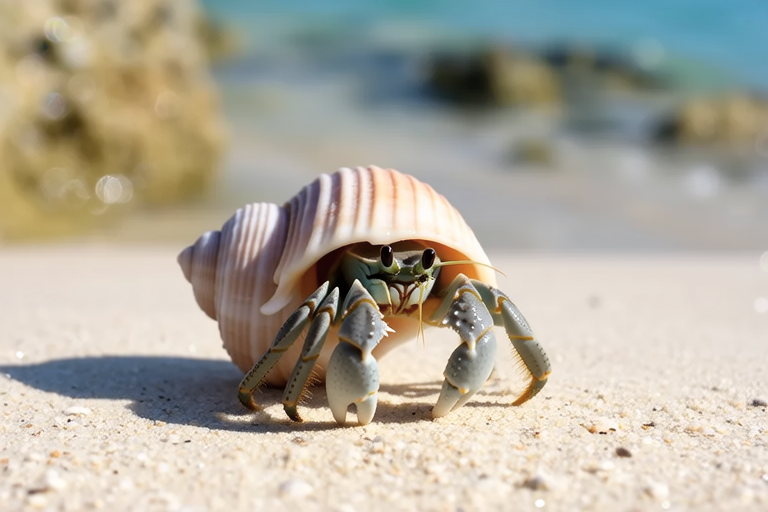
The Intriguing World of Hermit Crabs
Hermit crabs are some of the most fascinating creatures in the ocean, known for their unique adaptation of using discarded shells for protection. These crustaceans have evolved over millions of years, developing a remarkable ability to find and utilize empty snail shells as homes. Their lifecycle, behavior, and ecological role are as diverse and complex as the environments they inhabit.
Diversity of Species
There are over 1,200 species of hermit crabs, ranging in size from tiny, delicate creatures to large, robust animals. Some species live in the intertidal zone, where they can be found scuttling along the shore at low tide, while others prefer the safety of deep-sea trenches. The diversity of hermit crab species is a testament to their adaptability and resilience.
Natural Habitats
Hermit crabs are found in a variety of aquatic environments, including tropical beaches, rocky shores, and coral reefs. They thrive in areas with abundant food sources and a steady supply of suitable shells. Their habitats range from shallow coastal waters to deep ocean floors, each offering unique challenges and opportunities for survival.
Shell Changes and Growth
One of the most distinctive features of hermit crabs is their habit of changing shells as they grow. As they outgrow their current shell, they search for a larger one that will provide adequate protection. This process is crucial for their survival, as it allows them to maintain a secure home as they develop. The search for a new shell can be a perilous endeavor, with crabs often competing for limited resources.
Social Behaviors
Hermit crabs are highly social creatures, living in close-knit communities that can number in the thousands. They communicate through a series of chirps and clicks, using their antennae to sense vibrations in the water. These vocalizations serve various purposes, from warning of danger to coordinating group activities. Social interactions among hermit crabs play a vital role in their survival and reproduction.
Diet and Ecosystem Contributions
Hermit crabs are opportunistic feeders, consuming a wide variety of organic matter, including algae, detritus, and small marine organisms. Their diet is diverse, reflecting their adaptability to different environments. In addition to providing sustenance, hermit crabs play an important role in maintaining the health of their ecosystems. By breaking down organic material, they help recycle nutrients and promote biodiversity.
Challenges in the Wild and Captivity
Despite their resilience, hermit crabs face numerous challenges in the wild and captivity. Overfishing, pollution, and habitat destruction threaten their survival, while improper care in captivity can lead to stress and illness. Conservation efforts are essential to protect these fascinating creatures and ensure their continued existence.
Conservation Efforts
Efforts to conserve hermit crabs include the establishment of protected areas, public education campaigns, and research initiatives aimed at understanding their biology and ecology. These measures are critical for ensuring the long-term survival of hermit crab populations and the ecosystems they inhabit.
Conclusion
Hermit crabs are truly remarkable creatures, with a unique adaptation that has allowed them to thrive in a variety of aquatic environments. Their lifecycle, behavior, and ecological role are as diverse and complex as the environments they inhabit. By understanding and appreciating these fascinating creatures, we can work to protect them and the ecosystems they call home.
